
Dog / Puppy Therapy
Unlock Your Full Potential
Animal-assisted therapy (AAT), including both dog therapy and donkey therapy, is a therapeutic approach that incorporates trained animals to support emotional, psychological, and sometimes physical healing.

Why
To help individuals reduce stress, process trauma, and improve overall well-being.
Unlike typical pets, therapy dogs are trained to be calm, responsive, and safe in therapeutic environments. Their presence creates a non-judgmental space where individuals can experience comfort, connection, and emotional regulation.

How Dog Therapy Works
The therapeutic power of dogs comes from several psychological and physiological responses:
• Reduction of stress hormones: Interaction with dogs lowers cortisol (stress hormone).
• Increase in oxytocin: Physical contact such as petting a dog increases oxytocin, the “bonding hormone,” promoting feelings of trust and safety.
• Grounding and emotional regulation: Dogs help individuals stay present in the moment, which is important for trauma recovery.
• Safe relational connection: Many trauma survivors struggle with trust. Dogs provide unconditional acceptance without judgment.
For many people who have experienced trauma, a dog can act as a bridge back to emotional connection and safety.

Benefits for Veterans and First Responders with PTSD
Post-traumatic stress disorder (PTSD) is common among military veterans and first responders due to repeated exposure to traumatic events such as violence, death, accidents, and disaster scenes.
Dog therapy helps in several important ways:
1. Reducing Hypervigilance
Many individuals with PTSD constantly feel on edge. A therapy dog’s calm presence can help lower anxiety and create a sense of safety.
2. Interrupting Panic Attacks
Some trained dogs recognize physiological changes in breathing, heart rate, or body language and can interrupt panic attacks by nudging, licking, or applying pressure.
3. Improving Sleep
Nightmares are common with PTSD. Service dogs can wake individuals from night terrors or provide comfort during the night.
4. Decreasing Isolation
Veterans and first responders often withdraw from others. Dogs encourage:
• social interaction
• routine
• outdoor activity
5. Emotional Processing
Dogs help people feel safe enough to discuss traumatic experiences during counseling sessions.
6. Restoring Purpose
Caring for a dog can restore a sense of responsibility and meaning, which is especially helpful for individuals struggling with depression or loss of identity after service.
Who Benefits the Most?
Dog therapy can benefit many people, but research and clinical practice show particularly strong benefits for:
Veterans with Combat Trauma
Individuals returning from combat who struggle with:
• flashbacks
• survivor’s guilt
• hypervigilance
• emotional numbness
First Responders
Police officers, firefighters, EMTs, and paramedics often experience cumulative trauma from repeated exposure to critical incidents.
People with Severe Anxiety or Panic Disorders
The calming effect of dogs can help regulate emotional spikes.
Individuals Who Struggle to Open Up in Traditional Therapy
Some people find it easier to talk while interacting with a dog.
Individuals Experiencing Social Withdrawal
Dogs help rebuild trust and social engagement.
Other Conditions Dog Therapy Can Help
Dog therapy is used far beyond PTSD treatment.
Mental Health Support
It can help individuals experiencing:
• Depression
• Anxiety disorders
• Grief and loss
• Trauma recovery
• Loneliness
Autism Spectrum Disorders
Dogs can help children with autism improve:
• emotional regulation
• communication
• sensory calming
Hospital and Medical Recovery
Therapy dogs are used in hospitals to help:
• reduce pain perception
• lower stress before procedures
• improve patient morale
Elderly Care
In nursing homes and assisted living facilities, therapy dogs can:
• reduce loneliness
• improve mood
• stimulate memory and conversation
Substance Abuse Recovery
Animals can help individuals rebuild trust, responsibility, and emotional stability during recovery.
Why Puppies Can Be Especially Powerful
Puppies can have an even stronger emotional impact because they naturally trigger nurturing responses. Their playful energy can:
• encourage laughter and joy
• reduce emotional heaviness
• help trauma survivors reconnect with positive emotions
However, fully trained adult therapy dogs are usually preferred in clinical environments because they are calmer and more predictable.

Donkey Assisted Therapy
Donkey-assisted therapy is a type of animal-assisted therapy (AAT). It is a powerful and deeply human way to heal, especially for people who are dealing with trauma, stress, or too much feeling. In this plan, trained donkeys work with mental health professionals, counselors, and chaplains to help people deal with stress, work through hard times, and get back to a sense of balance. A donkey right away provides a calm, grounded space where there is no pressure to perform, explain, or even have the right words. This is different from traditional therapy settings. This kind of work is special for donkeys because of how they are. They are steady, aware, and very sensitive to how people feel. They don't act quickly or without thinking, and when things go wrong, they don't add to the chaos. They stay calm instead. For someone whose nervous system has been on high alert all the time because of trauma, high-stress work, or problems in their personal life, that calm becomes something they can start to feel and, over time, reflect. Stress chemicals like cortisol can go down when people are around donkeys. Oxytocin, the hormone linked to trust and connection, can go up. And being around a donkey can help people stay in the present. It doesn't have to happen; it just does when people are close, talk, and connect quietly.
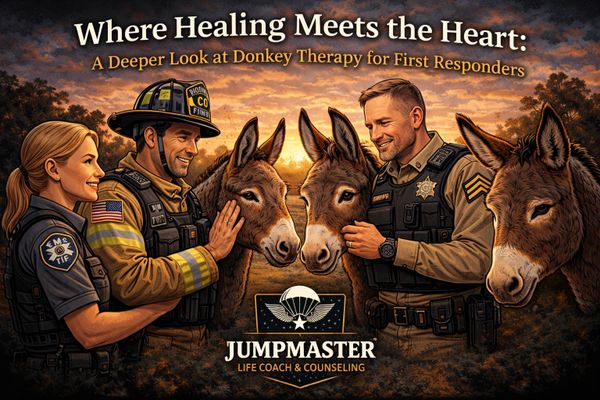
Why Donkeys Can Be Especially Powerful
Here is the best way for everyone to understand this through an event that happened a couple of weeks ago. A young boy, known for his energetic nature, struggles to find moments of calm. It was hard for his mom to keep up with him because he was always on the move and tense. It looked like nothing would work. It felt like there was always a fight over traditional methods, structure, and correction. He was then shown around the donkeys. Things didn't change at first. Like always, he ran around and jumped from one thing to another. The donkeys didn't do anything, though. They didn't try to tame or chase his energy. They just kept quiet. Something changed over time. He slowed down. He first stood next to them and watched them, then walked up to them and stopped. His mom saw her son at peace for the first time—calm, in control, and present. That change wasn't made by the donkeys. They did it, and he did it too. Veterans and first responders who deal with a lot of high-stress and traumatic events should follow the same rule. Too many of them are always on high alert, and their bodies don't know how to cool down. Therapy with donkeys helps them create a space where their nervous systems can begin to reset. The animal's calm presence can help lower worry, break stress cycles, and make you more aware of your own feelings without judging them. It also gives them a way to reconnect with others and themselves without the stress often associated with traditional therapy settings.
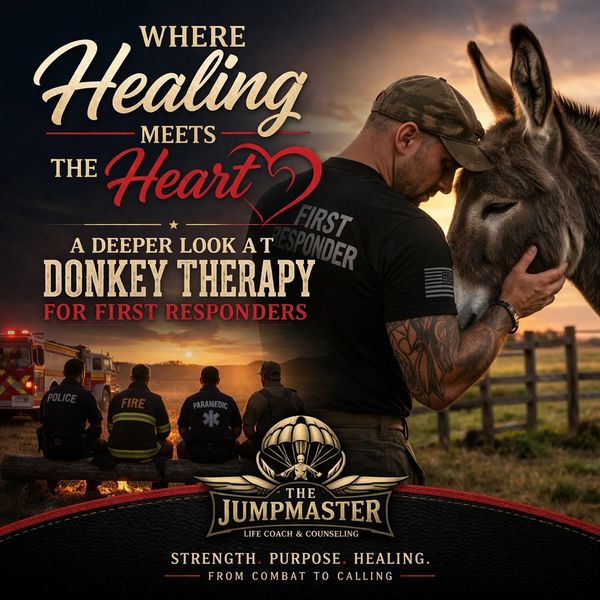
Why Donkeys Can Be Especially Powerful
This method can help with a lot of different needs, not just trauma healing. It can help people who are anxious, depressed, grieving, or feeling alone. It has worked well with kids who have trouble controlling their emotions or having too much physical input, including kids on the autism spectrum. It can even help people who are recovering from drug abuse build trust, duty, and a sense of purpose. It can bring comfort, connection, and joy to places where older people live, helping them feel less alone. The main idea behind donkey-assisted therapy is to slow things down so that real healing can start. This way of doing things goes against the world's constant push for more—more speed, more output, and more pressure. Stillness is drawn to it. It makes things safe. And that's where change can finally happen for many people, especially those who have been living in survival mode for years. To heal, sometimes you don't need to do more. Sometimes you just need to feel safe enough to be. That can begin with a donkey standing still next to you.

Why did we add therapy dog to help First responders and Veterans
The Story of Bear
The decision to add therapy dogs to our work supporting first responders and veterans was not just an idea or a program concept. It was born out of personal experience, loss, healing, and gratitude. At the center of that story is my German Rottweiler, Bear—my service dog, my companion, and in many ways, my lifeline.
Bear passed away in 2025, but his impact continues to shape everything we do.
Like many first responders and veterans, I carried invisible wounds from the job. The things we see and experience in these professions do not always stay at work. Trauma has a way of following you home, showing up in ways that many people outside this world may never fully understand. For me, those struggles came in the form of PTSD, depression, anxiety, and some of the most difficult symptoms to live with—night terrors and flashbacks.
Sleep was often the hardest part of my day. The moment I closed my eyes, memories I tried to bury would come rushing back. Scenes from critical incidents replayed over and over again. My mind would go back to moments of chaos, fear, and loss. Even when I was physically safe at home, my mind and body still believed I was in danger.
That constant state of hypervigilance is something many first responders know all too well. We are trained to stay alert, guarded, and mission-focused. Those instincts help keep us alive on the job, but they can also make it incredibly difficult to relax and feel safe when we are off duty.
That is where Bear came into my life.
Bear was not just a dog. He was trained as my service dog, and from the moment we began working together, I realized how powerful the bond between a handler and a service animal can be. Bear had an incredible ability to sense when something was wrong before I even realized it myself.
When anxiety would begin to rise, Bear would stay close and ground me. During moments when flashbacks threatened to overwhelm me, his presence helped bring me back to the present. He created a sense of stability and calm that was hard to explain to someone who had never experienced it.
But the biggest impact Bear had on my life was at night.
For years, night terrors had been one of the most exhausting and frightening parts of living with PTSD. I would wake up disoriented, sometimes in a panic, reliving events from the past. Bear was trained to respond during those moments. When a night terror started, he would wake me up, interrupting the cycle before it could spiral out of control.
It may sound like a small thing, but for someone living with PTSD, that interruption can mean everything. It meant fewer sleepless nights. It meant waking up feeling safer. It meant slowly reclaiming parts of my life that trauma had taken away.
Bear didn’t just help me survive those difficult moments—he helped me heal.
Over time, I began to realize something important. If Bear could make this kind of difference in my life, imagine what therapy dogs could do for other first responders and veterans who are carrying similar burdens.
Many people in these professions struggle silently. The culture of toughness and resilience can sometimes make it hard to admit when we need help. Therapy dogs create a bridge where traditional conversations about mental health may feel difficult.
A dog doesn’t judge.
A dog doesn’t ask complicated questions.
A dog simply shows up with calm, presence, and connection.
For someone experiencing stress, trauma, grief, or emotional exhaustion, that connection can open the door to healing.
We began introducing therapy dogs into environments where first responders and veterans gather—peer support meetings, counseling sessions, and training environments. The results were immediate and powerful. You could see shoulders relax. Conversations became easier. People who might normally keep their guard up began to open up.
The dogs created a space where healing felt possible.
They reminded people that it was okay to slow down, breathe, and reconnect with the parts of themselves that had been buried under years of stress and trauma.
Every time I see a therapy dog sitting beside a veteran or a first responder who is struggling, I think of Bear.
I think about the nights he helped me through.
I think about the quiet strength he carried.
And I think about the way a single dog helped change my life.
Adding therapy dogs to our work is our way of honoring that legacy.
Bear may be gone, but what he gave continues to live on. Through every therapy dog that walks beside a first responder. Through every veteran who finds comfort in that quiet presence. Through every moment when someone realizes they are not alone in their struggle.
Bear taught me that healing doesn’t always come from big moments or dramatic breakthroughs. Sometimes healing comes from something much simpler—a loyal companion sitting beside you, reminding you that you are safe.
That lesson is why we continue this work today.
And it is why Bear will always be part of the mission

In summary:
Dog therapy offers powerful emotional and physiological benefits, particularly for veterans and first responders struggling with PTSD. Through companionship, grounding, and unconditional acceptance, therapy dogs can help reduce anxiety, restore connection, and support the healing process.